

Card Meanings
How to Read Reversed Tarot Cards Without Assuming the Worst
A practical method for reading reversed tarot cards as delay, imbalance, internalized energy, resistance, or a different expression of the upright meaning.
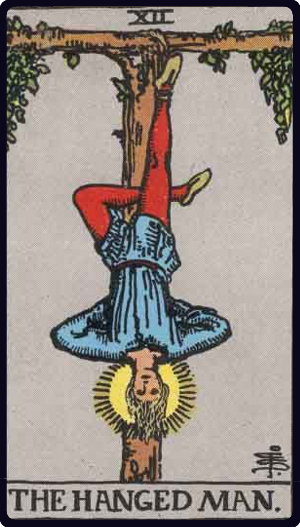
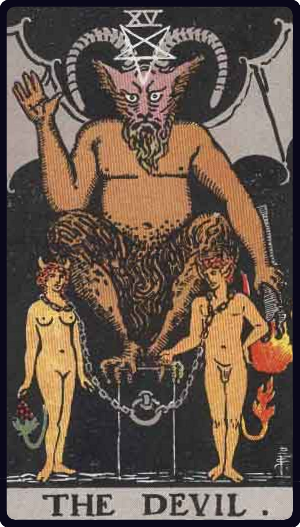
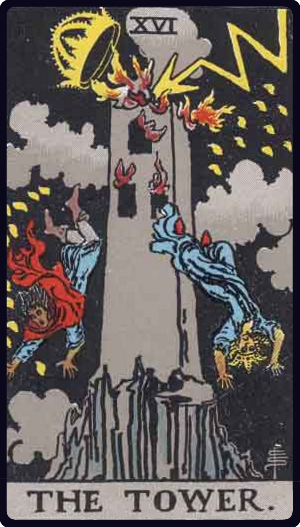
A reversed tarot card does not automatically mean the opposite of its upright meaning or predict a negative event. Read it as one of five possibilities: blocked, delayed, internalized, excessive, or being revised. The question and spread position decide which interpretation is most useful.
Key takeaways
- Start with the upright theme before changing its expression.
- Check whether the energy is blocked, delayed, private, excessive, or being reconsidered.
- Use the spread position to choose between those possibilities.
- Avoid turning every reversal into danger, betrayal, or failure.
Keep the upright meaning as the anchor
The upright card names the core symbolic territory. The reversed orientation changes how that energy is expressed, not necessarily the entire subject. The Hermit upright can represent intentional solitude; reversed, it may show isolation becoming unhelpful or an inner answer being avoided.
Starting from the upright theme prevents random interpretations and keeps the card connected to the deck’s established symbolism.
Five useful reversal lenses
Test a small set of lenses instead of memorizing a separate frightening definition for every reversed card. Ask which lens fits the actual question and position.
- Blocked: the energy is present but cannot move freely.
- Delayed: the direction is possible, but timing or preparation is incomplete.
- Internalized: the process is private or happening inside the user.
- Excessive: a useful quality has become too strong.
- Revision: the old expression is being reconsidered or released.
Example: The Lovers reversed
In a relationship spread, The Lovers reversed does not prove separation or infidelity. It may show values that are not aligned, a decision being avoided, attraction without agreement, or a choice that needs honest conversation.
In an advice position, it can ask the reader to stop abandoning their own values to preserve a connection. In an obstacle position, it may point to inconsistent choices. Position changes the answer.
Use combinations to narrow the meaning
A reversed card becomes clearer beside other cards. The Lovers reversed with Two of Cups may show real connection but poor alignment. With Seven of Swords, it can raise questions about avoidance or incomplete honesty. With Temperance, it may show that alignment can be rebuilt slowly.
Combinations should refine the pattern, not create a dramatic story unsupported by the question.
Try this question free
See reversals inside a real spread
Draw cards with upright and reversed orientation visible, then read each card according to the question and position.
Try a three-card readingFrequently asked questions
Are reversed tarot cards always negative?
No. They can show a delay, private process, imbalance, excess, resistance, or a lesson being revised. Some reversals can even soften an intense upright card.
Do I have to use reversed cards?
No. Many readers use upright cards only and interpret shadow or blocked expressions through context. Consistency matters more than one required method.
Should a reversed card mean the exact opposite?
Usually not. Begin with the upright theme, then ask how that theme is blocked, delayed, internalized, excessive, or changing in the spread position.